 The independent LGBTQ+ cruise directory

How gay-friendly is College Fjord?
You don't need another excursion to have a remarkable day in College Fjord. You need a view, something warm to wear, and enough breathing room in your schedule to notice what you're looking at. This is scenic cruising in Alaska's Prince William Sound: the ship is your viewing platform, rather than transport to a town. Stay aboard. Princess identifies College Fjord as a scenic destination where cruise ships do not dock, which is the essential fact to settle before planning anything else.
Understand the place before choosing your view
Think of College Fjord as a landscape you move through, not one attraction you tick off. Ice, mountains and water share the frame, and the approach deserves attention as well as the most dramatic glacier face. The Forest Service's Chugach visitor guide places the Nellie Juan–College Fiord area within the wider Prince William Sound landscape. That regional context helps explain why a map is more useful here than a shopping list.
Start wide. Look at where the slopes meet the water before reaching for the zoom. If you usually prefer architecture or museums, try reading this landscape in the same way: notice its shapes, surfaces and relationships. You don't have to become an outdoor adventurer to find it absorbing. A comfortable chair and an interested eye are perfectly respectable equipment.
Make the onboard programme your clock
Read the daily programme and listen to the crew's announcements about scenic cruising. Ask which viewing areas will be open and when you should be ready, then arrange meals and appointments around that information. Leave space. A fixed dinner reservation or treatment can be moved more easily before the day starts than when you're watching the scenery arrive.
Don't turn a broad itinerary label into a promised arrival minute, glacier approach or length of stay. Ask the ship about the actual plan and follow any revisions. If you're travelling with friends who value a very different holiday rhythm, agree on one shared viewing session rather than expecting everybody to stand together for the entire passage. You can enjoy the same day without conducting it by committee.
Choose comfort before defending a railing
Scout an outdoor viewpoint and an indoor alternative before the scenic period. Compare the view from a seated position as well as standing height, check how you would reach a restroom, and note an easy route back inside. Try it first. An apparently excellent deck on a plan may not suit your own balance, reach, temperature tolerance or need to rest.
Ask crew about doors, thresholds, lifts, accessible toilets and the places where a wheelchair or scooter can stop without blocking circulation. Don't assume that every public deck has the same access or sightline. For older guests, anyone managing fatigue, and companions who simply dislike standing, a comfortable partial view can be a better choice than an exhausting pursuit of the supposedly perfect spot.
Dress for a change of mind
Pack layers you can add or remove, a weather-resistant outer layer, and shoes you trust on a ship's deck. Keep your hands usable for binoculars or a camera, and protect any equipment you take outside. Stay flexible. Check the onboard weather information for your own passage instead of building the day around a monthly average or a photograph taken in different conditions.
Make your indoor alternative a real plan, not a punishment for getting cold. Agree where you'll meet if one of you heads inside, and take your cabin key rather than relying on your partner to remain beside you. Couples often discover that one person wants another half-hour outside while the other has completed a very satisfying relationship with the wind. Both can be right.
Look at the glacier without demanding a performance
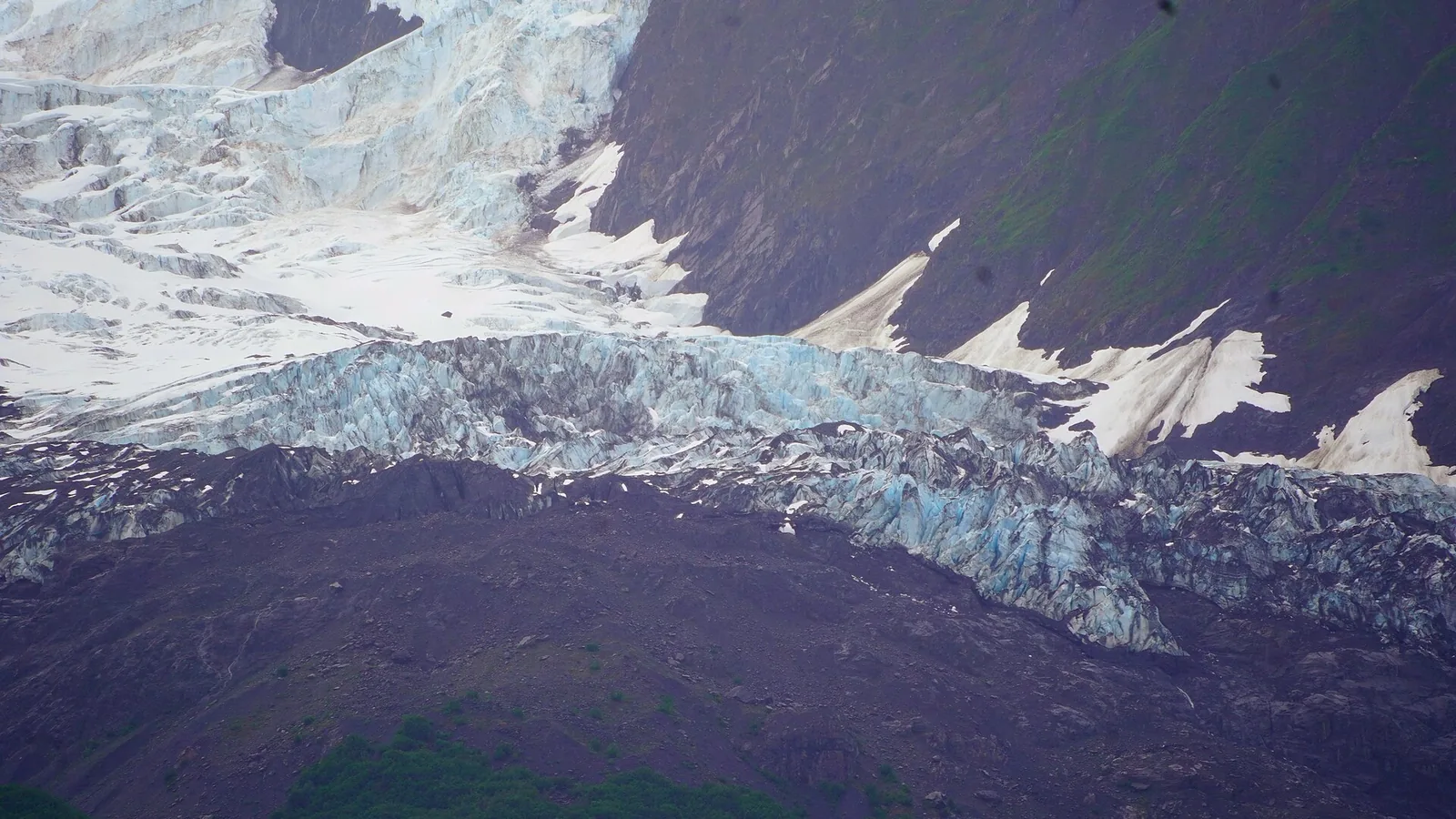
A tidewater glacier meets the sea; calving is the breaking away of ice. The US Geological Survey's glacier glossary is a useful introduction to the vocabulary. Watch patiently. A dramatic break is a possibility to appreciate if it happens, not a scheduled show that somebody owes your camera.
Use the quieter moments to notice textures, creases and the contrast between ice and surrounding rock. If commentary is available, use it to connect what you're seeing with the names on your map. Avoid treating a single photograph as evidence of a glacier's long-term condition. For that question, the USGS discussion of tidewater glacier research explains why change involves more than a simple visual comparison.
Photograph the experience you actually have
Take an establishing photograph before concentrating on details, then make room for a few images with your travelling companion in them. Keep it simple. Wipe the lens, check your battery, and practise your phone's zoom before the most absorbing part of the passage. A short video with the original sound may bring the day back more vividly than another long burst of nearly identical frames.
If you're shooting through a window, try changing your position to reduce reflections rather than leaning equipment against the glass. On deck, keep straps and bags under control and leave space for other passengers. Ask before including strangers in a close portrait. Then put the camera away for a while; you booked a journey, and it's reasonable to appear in your own attention span.
Let wildlife remain wildlife
Carry binoculars if you enjoy watching for animals, but don't build the emotional success of the day around a particular sighting. Look gently. Scan the water and ice, share a sighting without shouting instructions across the deck, and follow the crew's direction about where passengers may stand.
NOAA's Alaska marine mammal guidance puts distance and avoiding disturbance at the centre of responsible observation. Let the bridge manage the vessel's position; a closer photograph isn't a reason to request an approach. If you don't spot anything, the landscape still deserves your time. Nature-led travel is more rewarding when curiosity replaces a demand for a particular animal to report for duty.
Find your people without inventing a shore scene
The social experience here is aboard your ship. There isn't a shore visit at this scenic call, so a local gay beach, bathhouse, bar, club or restaurant is not an available port-day plan. Stay clear about that distinction. A ship's spa is its own facility, and a gay group travelling aboard is a different proposition from a local nightlife district.
For a hosted gay sailing, check the host's actual programme for shared viewing or meetups. On another cruise, look at the daily schedule and ask about social gatherings that interest you. Neither the landscape nor the itinerary label establishes an onboard event, an exclusively gay crowd or a particular social climate. Choose your company and boundaries as you would elsewhere aboard, with room for a sociable afternoon or a happily private one.
Make a solo day feel easy
Give yourself one simple point of connection: a shared viewing arrangement with someone you've met, a conversation about the map, or a plan to compare photographs over a later meal. Start small. You don't need to approach a whole group to enjoy a social moment, and you don't need to turn every quiet hour into a networking opportunity.
If you're travelling sober, separate the pleasure of a warm drink or a shared table from any assumption that glacier viewing needs alcohol. If you're travelling with a partner, ask whether you'd rather talk, take pictures, or watch quietly before one of you starts narrating everything. A little agreement makes it easier to share the moment without requiring identical reactions.
Arrange food around your own needs
Check that day's dining programme and make a plan that doesn't depend on a particular outlet being open when you get hungry. Ask early. If you need dietary accommodations, discuss the actual meal and ingredients with the ship's dining team rather than assuming a snack available near a viewing deck will work for you.
Keep drinks and food clear of shared rails and walking routes, and plan a break before you're tired or uncomfortable. For friends with different appetites or medical needs, arrange a meeting point instead of making everyone wait for one long meal. This isn't a local restaurant stop, but it can still be a thoughtful food day: enough to eat, somewhere comfortable to sit, and no rushed decision between lunch and the view.
Keep Whittier and the fjord separate
Don't book a land-based meeting in Whittier as though a provider can collect you from a cruise ship in College Fjord. They are different itinerary contexts. Check carefully. Use the operator's College Fjord description to understand the onboard experience, then research any actual embarkation or disembarkation arrangements as a separate part of your trip.
If you're adding a small-boat outing before or after the cruise, establish its real departure point, baggage arrangements, transfer and accommodation needs against your travel dates. Never infer a connection from two listings that both mention Prince William Sound. On this scenic segment, the useful decision is how you'll spend time aboard; a product search for a nearby departure town doesn't change that.
Leave room for the rest of Alaska
College Fjord works especially well as a restorative counterpoint to busy shore days. Make it yours. After walking tours, early starts or a land programme, you may want a slower rhythm: watch outside, warm up inside, compare what you've noticed, then go back for another look. An active traveller can enjoy the same passage without filling every quiet interval with another activity.
Keep the next day's documents, transfers and packing decisions organised before they intrude on this one. If a land extension follows, check its separate instructions rather than assuming the scenic call provides a place to shop or prepare ashore. Choose an Alaska itinerary on GayCruiseList.com for the mix of actual landings and scenic cruising that suits you. Then give yourself permission to enjoy the water, the company, and a view you didn't have to earn by rushing.
A scenic cruising day
College Fjord is a scenic-cruising stop — the ship passes through without going ashore, so there's no berth and no gay places to list here.
Gay sailings that call at College Fjord
No currently listed LGBTQ+ sailings visit this port.
Bookable excursions
No matching excursions are available to display right now. Try again later.
Opening hours and local conditions change. Confirm details before setting off, and use the ship’s all-aboard time—not optimism—as your deadline.