 The independent LGBTQ+ cruise directory
Austria · ATMLK
Gay Melk port guide
Gay-friendly reality checks, genuinely useful shore ideas, and zero pressure to call every beach hidden.
How gay-friendly is Melk?
Melk in one glance
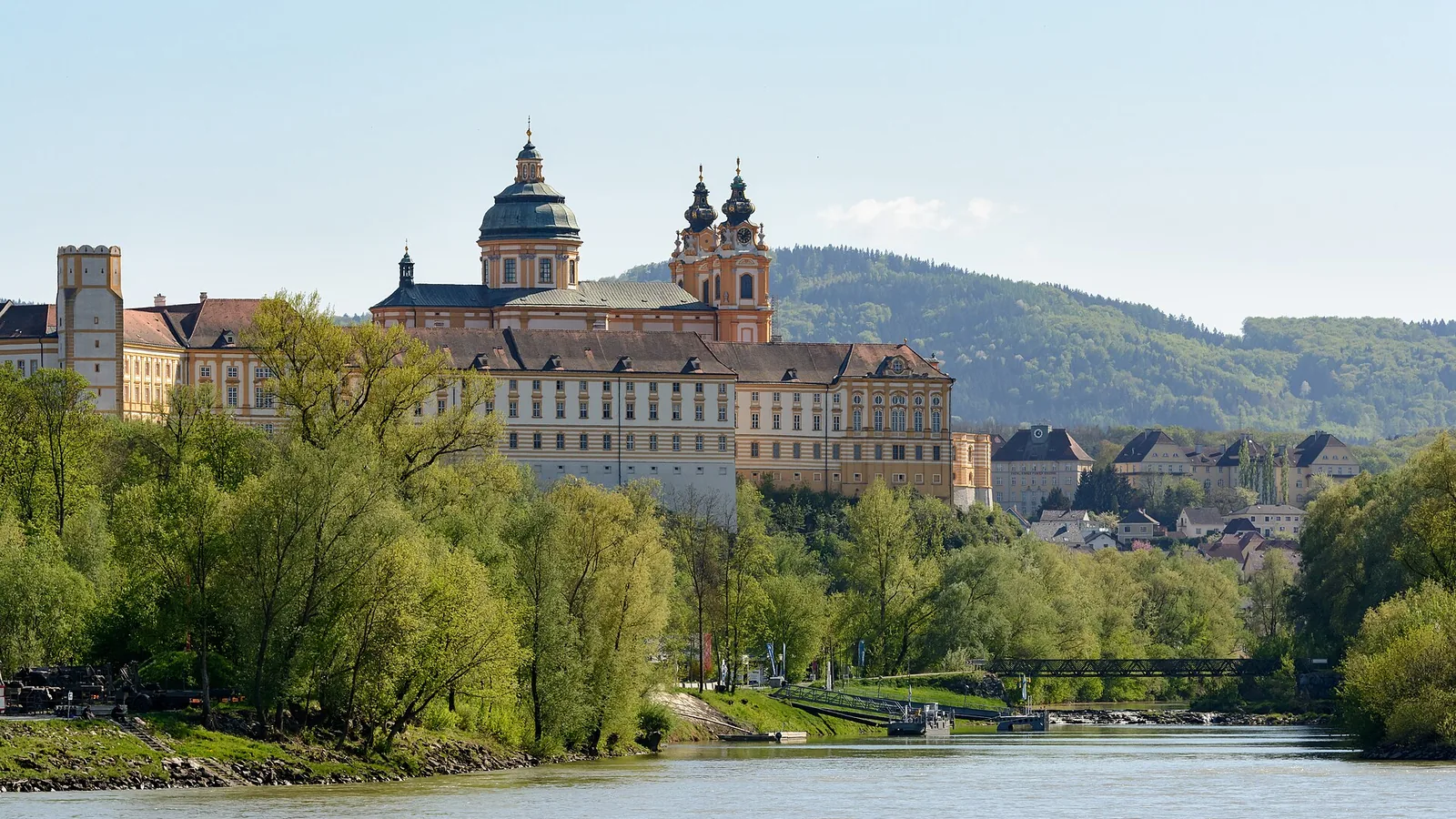
Melk is where the Danube hands the architectural microphone to one enormous golden Baroque abbey. The town is compact, the river landing is walkable, and the Wachau landscape begins just beyond it. For river-cruise passengers, the decision is less “What can we possibly do?” than “How much abbey can one person absorb before lunch?” The answer is quite a lot, provided the library does not cause spontaneous shelving envy.
Gay passengers should expect a small Austrian town and major heritage stop, not a gay-scene destination. No dedicated gay beach, sauna, restaurant, bar, or nightclub was verified within the practical port area. Austria's broader legal framework and visitor infrastructure make an ordinary couples' day straightforward, while Vienna supplies the nearest substantial year-round gay scene. Melk does, however, hold a documented queer memorial connection at its former concentration-camp site, where researchers and the memorial have restored visibility to homosexual prisoners persecuted by the Nazis. That history deserves care, not tourism gloss.
From the Danube to the abbey
The official Melk Abbey visitor FAQ places the river pier on the Danube and gives a walking route along Fährstraße, across the green lifting bridge, through the pedestrian town center, and uphill to the abbey. It estimates about thirty minutes. A stair route is available, while Wiener Straße provides an alternative without those stairs. The route still rises, and “without stairs” is not identical to “level.”
River conditions, rafting, and vessel position can change the exact gangway. Ask the cruise director for the day's return time and access. Ships sometimes offer a coach up to the abbey, which can save energy for the large interior. Confirm whether the return is by coach, on foot, or through town. Photograph the landing and note whether another vessel lies between yours and shore; river ships enjoy rearranging themselves while passengers are admiring ceiling frescoes.
The town center sits between the pier and abbey. Rathausplatz, Hauptplatz, cafés, shops, and lanes make a pleasant walk. The tourist information center is on Kremser Straße and publishes current weekday and Saturday hours. Melk is manageable independently, but a guided abbey visit may be included in the cruise fare. Compare what the ship tour covers before buying a duplicate ticket with a different lanyard.
Melk Abbey: the main event
Melk Abbey is an active Benedictine monastery, school, cultural institution, and major visitor site. A standard visit includes the former Imperial Rooms and museum, Marble Hall, balcony, library, and abbey church, with the park, Northern Bastion, Wachau Lab, and exhibitions available according to season and ticket. The official site recommends at least two and a half hours for the complete complex. On a short call, prioritize rather than power-walking past a thousand years of context.
The guided interior route takes roughly fifty minutes. Current 2026 information lists daily English tours at published times, with additional languages seasonally; schedules differ in winter. Individual access without a guide also varies by season. Buy through the official ticket office, arrive before last admission, and check service or event restrictions. The abbey church remains a place of worship. Quiet voices, appropriate clothing, and compliance with photography rules are more attractive than any filter.
The library is a highlight, with historic manuscripts, books, architectural illusion, and a ceiling fresco. Restoration or conservation work can alter the route. Do not touch cases, books, or railings marked otherwise. The Marble Hall and balcony frame views over town and the Danube valley. Group movement may be timed because these rooms were designed for imperial ceremony rather than simultaneous arrival of six coach parties holding audio receivers.
The abbey church is an exuberant Baroque space. Visitors should distinguish sightseeing access from liturgical times and follow staff direction. Organ music or services can change the atmosphere and route. The abbey's scale and wealth also invite thoughtful questions about religious power, education, land, art, and continuity; a good guide provides more than adjectives for gold.
Park, bastion, and gardens
From spring through autumn, the abbey park adds paths, old trees, themed gardens, installations, and the Baroque garden pavilion with vivid frescoes. The official 2026 season and daily hours vary around late March and late October, and park admission is included with a standard abbey visit. Park-only tickets may be available. Check same-day access in poor weather or during events.
The Northern Bastion and Wachau Lab provide another viewpoint and interpretation of the region. The park is not uniformly flat; distances, gravel, and gradients matter. Travelers who have spent their energy on the walk uphill may prefer the balcony and town rather than completing every garden loop. Benches are a valid cultural strategy.
Photography rules can differ between exteriors, park, museum rooms, library, and church. Respect signs and staff. Drones require permissions and do not belong above a working monastery simply because the river cruise has a group chat.
The town below
Melk's town center rewards an hour. Painted façades, narrow lanes, the parish church, old civic buildings, cafés, and views back to the abbey create a coherent small-town experience. Local shops sell Wachau products, wine, apricot goods, and gifts. Verify opening hours; Sundays, holidays, and the shoulder season can be quiet.
The Wachau is associated with apricots, vineyards, cycling, and river landscapes. Taste apricot jam, cake, liqueur, or dumplings without assuming every product is locally grown merely because an orange fruit appears on the label. Regional wines include Grüner Veltliner and Riesling. Ask for a local pour, drink water, and remember the ship may serve another tasting before dinner with the persistence of a benevolent aunt.
Restaurants and cafés in town are mixed-crowd. No specifically gay or LGBTQ+-centered restaurant was verified, and none should be invented. Choose according to current hours, menu, dietary needs, and route. The abbey grounds include restaurant service, while town options can offer a quieter break. Tell staff if the gangway deadline is firm; leisurely service and a river schedule do not always share priorities.
Beyond Melk
Schallaburg, Aggstein, cycling routes, vineyards, and other Wachau towns may appear in cruise excursions. Each requires transport and competes with the abbey. A ship-organized outing can coordinate coaches and return, while independent plans need a conservative buffer. Melk is a poor place to rent a bicycle for the first time since childhood and discover that “Danube cycle path” still contains distance.
Many itineraries sail through the Wachau after or before the stop. Check the daily program before booking a land tour through scenery the ship will narrate from the sun deck. Conversely, a cycling or wine excursion can provide close-up context the vessel cannot. Decide whether the abbey, landscape, activity, or food is the priority.
Nearby Krems and Dürnstein have their own attractions, berths, and transport. Do not assume a product ending in another town returns to Melk unless the operator says so. River cruises sometimes arrange passengers to rejoin downstream; that choreography belongs to the cruise company, not an independent traveler's improvisation.
Gay context and the memorial
No permanent gay scene was found in Melk. The town's visitor identity centers on the abbey, Wachau, and river travel. Gay couples can use mainstream attractions, restaurants, and hotels without requiring a separate route. Austria recognizes same-sex marriage and has prominent gay communities and events in larger cities, especially Vienna. Current national travel and equality guidance should be consulted for individual needs, particularly those of trans travelers.
The Melk Concentration Camp Memorial documents a subcamp of Mauthausen. A recent research project with QWIEN focused on queer prisoners, and in October 2024 the memorial unveiled a plaque for prisoners persecuted as homosexual. The project notes that Austria did not officially recognize these people as Nazi victims until 2005 and also records vandalism against a Pride flag at the memorial. This is specific, serious queer history.
The memorial is not beside the abbey visitor route and should be visited only with adequate time, current opening information, and respect. It is a place of commemoration, not a quick themed attraction. Do not pose frivolously, photograph people without consent, or treat the Pride marker as décor. If the site is closed or a guided program is unavailable, its official digital material still provides responsible context.
Vienna is the practical destination for dedicated gay bars, saunas, community centers, and events. A river itinerary often includes Vienna separately. Traveling there during a Melk call sacrifices the reason the ship stopped and introduces rail or road risk. Save the capital's scene for its own day or a hotel stay. In Melk, visibility can mean being an ordinary couple at the abbey and engaging thoughtfully with the memorial's queer history.
Beaches, wellness, and nightlife
No dedicated or reliably gay-popular beach was verified within the port radius. The Danube and regional recreation areas are not casual city swimming beaches and can involve currents, navigation, private land, or local rules. Do not enter the river from an attractive bank without an officially designated bathing area and current safety information.
No dedicated gay sauna or bathhouse was verified. Hotel spas, pools, and wellness facilities are mainstream and follow their own guest, swimwear, and gender rules. They should not be described as gay venues. No dedicated gay bar or club was verified either. The evening economy is small-town dining, wine, and local bars rather than a late queer circuit.
These none-found conclusions help travelers allocate time. A gay-specific stop in Melk is the memorial history, not nightlife. The absence of venues is not a negative judgment about welcome; it is accurate product information. Nobody needs to spend half a port call searching for a club that exists only in a stale directory's imagination.
Accessibility
The pier-to-abbey route takes about thirty minutes and climbs. The official abbey FAQ identifies the Wiener Straße alternative to the stairs. Visitors requiring assistance should contact the ticket counter in the first courtyard so staff can organize support and advise on the route. Elevators or adapted access may cover much of the interior, but historic transitions, temporary restoration, church access, gardens, and viewpoints require confirmation.
Ask the cruise line whether a coach transfer is available and where it drops off. River gangway angles vary with water levels, and rafting may require crossing another vessel. Wheelchair users should provide device dimensions and transfer needs. For hearing, vision, or cognitive access, ask about guided languages, written interpretation, audio systems, seating, and quiet routes.
The park includes varied surfaces and distances. The town has cobbles and curbs. A satisfying lower-exertion plan can use coach transport, the principal abbey rooms, a viewpoint, lunch, and a slow descent through town. Accessibility is about selecting what works, not apologizing for skipping the farthest garden.
Seasonal timing
The abbey is open year-round, but touring arrangements change. The official 2026 schedule provides broad daily access from late March through November 1, then more restricted guided-tour patterns on many winter weekdays. The park operates seasonally. Always use the current official page; exact dates, admission prices, language tours, restorations, and last entry can change.
Spring brings blossoms and high-water possibilities. Summer brings long days, heat, and group traffic. Autumn colors and harvest atmosphere are lovely, while winter calls can coincide with markets and limited daylight. Rain makes stone and slopes slippery; snow and ice change walking plans. Danube water levels may move berths or replace sailing segments with buses. The cruise director's notice outranks a saved itinerary.
Plans that work
With three usable hours, take the ship transfer or walk directly to the abbey, complete the main interior route, enjoy the balcony, and descend through town. Skip the full park. Buy a snack or regional product only after confirming the remaining walk.
With five to six hours, allow the official two-and-a-half-hour recommendation for abbey, park, bastion, and exhibitions, then have lunch and explore town. If the queer memorial is a serious priority, check its access and treat it as the second major activity rather than an add-on.
On an overnight, enjoy a slow dinner and the town after day groups leave, but do not expect gay nightlife. A longer stay can support cycling, wine, Schallaburg, or other Wachau experiences. Confirm late gangway access and transport because small-town service thins in the evening.
The bottom line
Melk is an excellent river stop for gay passengers because it is easy to understand and hard to forget: one extraordinary abbey, a pleasant town, and the Wachau at the door. It has no verified gay commercial scene, and the guide says so plainly. Its queer relevance is quieter and more consequential at the concentration-camp memorial. Give the abbey enough time, use the stair-free route if needed, and return to the Danube before the ship continues through a landscape that has already mastered the art of the dramatic exit.
Gay places ashore
Not every listing here yet cites a source or publishes a distance from your berth.
Beaches: No verified gay beach found
No dedicated or reliably gay-popular beach was verified in Melk. The Danube and regional recreation areas should not be treated as informal swimming or naturist venues without designated local access.
2 research sources
Saunas: No verified gay sauna found
No dedicated gay sauna or bathhouse was verified within practical Melk port range. Hotel wellness facilities are mainstream and should not be relabeled as gay venues.
2 research sources
Bars & clubs: No verified gay bar or club found
No permanent dedicated gay bar or nightclub was verified in Melk. Vienna is the nearest substantial year-round gay scene; Melk's documented local queer relevance is the memorial work for homosexual concentration-camp prisoners.
Gay sailings that call at Melk
- Europe Pride River Cruise · June 6, 2027 · VACAYA
- Prague & Danube River Cruise · August 6, 2027 · Brand g Vacations
- Danube Gay Group Cruise · August 22, 2027 · Two Bad Tourists
- Christmas Markets Along the Danube · November 30, 2027 · Aquafest Cruises
- Europe Christmas Markets Cruise · December 9, 2027 · VACAYA
- Prague & Danube River Cruise · September 30, 2028 · Brand g Vacations
Bookable excursions
No independently verified port-fitting excursions are listed right now.
Opening hours and local conditions change. Confirm details before setting off, and use the ship’s all-aboard time—not optimism—as your deadline.