 The independent LGBTQ+ cruise directory

How gay-friendly is Rábida Island?
Your Rábida cruise visit: a small island, a close look
You come to Rábida on a gay Galápagos cruise for the red shore, wildlife and time exploring with your naturalist guide. Bring your curiosity. This is an expedition landing destination rather than a town port, so build your expectations around the visit your vessel can actually make. Our recommendation is to enjoy the island slowly within the guided programme, then take the opportunity to rest aboard between activities. You don't need to turn every wildlife encounter into a competition over who took the most photographs.
The gay social experience comes from your group and vessel. Rábida itself isn't a gay resort, a clothing-optional beach club or an independent nightlife stop. That distinction helps you choose the trip: couples may love the shared discovery, solo passengers can enjoy the companionship of a small group, and sober travelers can make the landscape the centre of the day. If your main holiday goal is late-night venues ashore, compare a different itinerary before booking.
Keep Rábida separate from its neighboring islands
Check the exact itinerary. The Out Adventures Galápagos programme names Rabida and Bartholomew within its trip, while Natural Paradise’s vessel operator includes Rábida in its published routes. Those sources establish the destination context; your final voyage instructions establish your own sequence and arrangements. Don't transfer a description of another island's landing, steps or beach onto Rábida simply because the visits share a day in an itinerary.
This page covers Rábida Island, also written Rabida, in the Galápagos. It doesn't treat Bartholomew, Santiago or a mainland Ecuador stop as an alias. Before booking, ask the operator which route applies to your departure and how it handles changes. A port card makes the island easier to research; it doesn't give you permission to land independently or guarantee a particular beach visit. Keep the final itinerary and the crew's briefing as the authority for your actual day.
The red beach and the island landscape
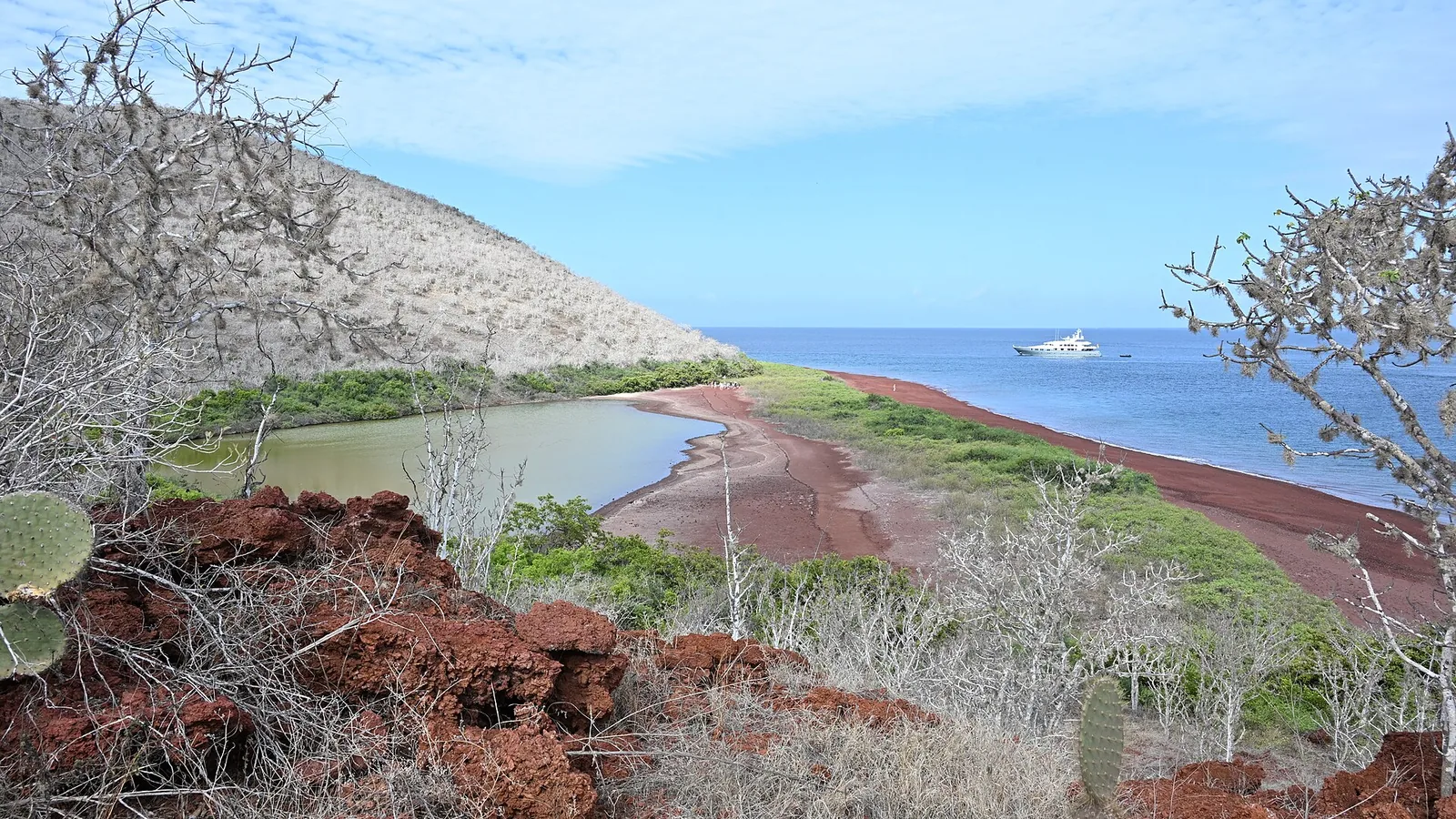
Look at the details. Galápagos Conservancy’s Rábida profile describes the island's iron-rich red landscape and a wet landing on its northern beach. That gives the visit a distinctive character before you even begin the walk. Notice the contrast between shore, water and vegetation, then let the guide explain what you're seeing. You don't need to know every species beforehand to enjoy asking a good question.
The Conservancy also describes a lagoon behind the beach and an inland trail. Wildlife is never a guaranteed performance: its profile explicitly notes that flamingo numbers vary and some years they aren't seen. Treat any animal encounter as a possibility rather than a booking inclusion. Keep time to watch behavior instead of rushing to the next subject. If a hoped-for bird is absent, the geology, plant life and quieter details still give you plenty to notice. Your guide can help you understand the place you actually find.
Prepare for the landing before leaving the vessel
Listen to the briefing. Ask the expedition team what the current landing involves, what footwear they recommend and how to protect your belongings from water. A published wet-landing description doesn't settle the conditions for your visit. Confirm how you will board and leave the small boat, what assistance the crew can provide and whether there is an alternative if the landing doesn't suit you. Don't wait until you're at the boat to explain a mobility or balance concern.
Take only what you need for the scheduled activity, following the crew's packing instructions. Keep essential medication protected and discuss any needs that require ready access. Ask where shoes and wet gear will go when you return, and use the operator's cleaning instructions between visits. If you are unsure about a movement or step, say so. There is no prize for concealing a problem until it becomes harder to manage. A clear conversation helps both you and the crew plan sensibly.
Wildlife watching means giving animals room
Let the guide lead. Check the Galápagos National Park’s current visitor information and follow the instructions given for your visit. Ask your naturalist about the current wildlife-distance rules, permitted routes and any restrictions before landing. Follow that briefing throughout the visit, even if an older guide or another visitor suggests something different. If an instruction isn't clear, ask before the group moves on.
Keep food packed away, give wildlife space and avoid trying to stage a closer photograph. If an animal moves toward your path, ask the guide how to respond rather than pushing past. Keep your attention on where you place your feet as well as what's in the camera. Don't collect natural souvenirs or treat a quiet spot as permission to wander beyond the guided route. The most useful thing to take home is a better understanding of the island. A considerate visit leaves the next group the same chance.
Swimming and snorkeling depend on your own visit
Ask about the actual plan. The Conservancy describes swimming and snorkeling as activities associated with Rábida, but that isn't a promise about sea conditions, wildlife sightings or your departure's programme. Confirm the proposed activity with your operator, including where it takes place, how entry and exit work and what support is available. If you want to stay on the boat, discuss that option early rather than feeling obliged to join everyone in the water.
Be candid about your swimming confidence and experience with masks and fins. Ask how equipment fit is checked, what you should do if you become tired and how the group stays together. Follow the crew's decision if conditions change. A calm-looking photograph can't establish the current water temperature or the ease of a snorkel. If a particular activity is the main reason you're booking, explain that priority to the operator and read its written change and cancellation arrangements before paying.
Gay beaches, baths, bars and restaurants
Keep the labels honest. The reviewed island profile and gay operator programme don't establish a dedicated or reliably gay-popular beach on Rábida. The red beach is a shared wildlife visitor site; a group of gay passengers landing there doesn't change its identity or establish a clothing policy. Follow current instructions about clothing and swimming. This is a bounded conclusion about Rábida, not a statement about every beach in Ecuador or elsewhere in the archipelago.
The same source review didn't establish a gay sauna, bathhouse, bar, club or restaurant on the island. Our structured audit records each conclusion separately, rather than filling empty categories with unrelated mainland businesses. Ask your vessel about meals and social time aboard, and check what your own booking includes. Don't arrive expecting to choose a restaurant after the walk. If you want nightlife or a community event during the broader trip, research the exact mainland or inhabited-island stop where you will have usable time.
Being out on a group expedition
Choose your comfort level. A gay group itinerary can offer welcome companionship, but ask the operator what its group format and hosting actually involve. Don't infer that every crew member, guide or other visitor is part of that group. Respect other passengers' privacy and ask before sharing photographs or identifying someone publicly. If you prefer a quieter pace, tell your host; being sociable doesn't require joining every conversation or activity.
For the wider Ecuador journey, UK travel advice, reviewed on November 11, 2026, says same-sex relationships are legal while social attitudes can remain conservative. Read the current advice before travelling and consider the mainland transfers and hotel stays separately from the expedition landing. National legal context doesn't guarantee an individual's reaction, and Rábida shouldn't inherit an unqualified safety label from a gay cruise advertisement. Keep your operator's emergency contact available throughout the trip.
Food, access and time to recover
Discuss needs before booking. Tell the operator about allergies, dietary restrictions, medication storage and any assistance you need with walking or small boats. Ask how meals are handled between activities and what snacks or drinks you are permitted to carry. Don't assume a small vessel can improvise every dietary substitution after departure. Explain essential cross-contact precautions and ask for a clear response before committing. Couples with different activity preferences should also check how the programme accommodates someone sitting out.
If you're an older passenger, use a walking aid or manage fatigue, ask about the actual surfaces, landing movements, distance and opportunities to rest. The trip's overall fitness label doesn't answer every access question. Ask the crew what can be adapted and what cannot, including the alternative when a shore visit isn't suitable. A restful interval aboard can be a positive choice. Plan it with the team so you know when and how you'll rejoin the group.
Weather, money and connectivity belong in the briefing
Prepare for the day ahead. Check the operator's current packing guidance and the forecast close to travel, then ask what layers, sun protection and water protection suit the planned activity. Avoid treating a seasonal wildlife or weather description as a guarantee. If conditions change the landing or snorkeling plan, listen to the revised briefing rather than following a schedule saved months earlier. Keep essential documents and contact information available offline and check how you can reach the crew when needed.
Arrange payments and any currency needs for the broader trip before boarding, using your operator's current instructions. This guide doesn't promise an island cash machine, card terminal, shop or mobile connection. Ask which expenses remain outside your fare and how they are settled, without assuming an excursion card covers the vessel's arrangements. Check your travel insurance's own terms for the activities you intend to do. The right question is whether your particular booking and policy suit your plans.
Enjoy the expedition you have chosen
Leave space for discovery. Rábida suits travelers who want a guided nature visit and are comfortable letting local conditions shape the activity. It is especially appealing when you value wildlife observation, photography and a shared small-group experience more than independent shopping or nightlife. Our advice is to read the full voyage programme, ask the practical questions early and keep the landing day free of competing expectations. You can enjoy the walk without making every animal sighting a requirement.
Compare the sailings below and confirm the exact route with the operator. If you book an additional outing, confirm how it fits your operator's expedition programme and landing arrangements. Follow the guide, respect wildlife and take the time to notice something small. Then enjoy comparing discoveries with your companions back aboard. Have a wonderful visit.
Gay places ashore
Not every listing here yet cites a source or publishes a distance from your berth.
Beaches: No verified gay beach found
The reviewed Rábida island profile and gay operator landing programme identify a shared wildlife visitor beach, without establishing a dedicated or reliably gay-popular beach. A gay group visit does not change the beach identity or establish clothing rules.
Saunas: No verified gay sauna found
No gay sauna or bathhouse is identified in the reviewed Rábida island and operator inventories. This finding is bounded to the protected island landing, rather than other Galápagos islands or mainland Ecuador.
Bars & clubs: No verified gay bar or club found
The reviewed Rábida island and operator landing inventories do not establish a gay bar or club. Social time aboard the vessel is separate from an island venue, and no opening or event schedule ashore is promised.
Restaurants & cafés: No verified gay restaurant or café found
No restaurant with a meaningful gay identity or documented gay popularity is established in the reviewed Rábida island and operator inventories. Confirm meals with the vessel rather than planning an independent island restaurant visit.
Gay sailings that call at Rábida Island
- Gay Galápagos Cruise · May 10, 2027 · Out Adventures
- Gay Galápagos Cruise · November 22, 2027 · Out Adventures
Bookable excursions
No matching excursions are available to display right now. Try again later.
Opening hours and local conditions change. Confirm details before setting off, and use the ship’s all-aboard time—not optimism—as your deadline.